

Mickey Gambale | How exchange control upgrades have reshaped offshore investing
Updates to exchange control rules have made offshore investing more accessible, creating an opportunity for advisers to have broader conversations with clients about how global assets fit into their overall financial plans.
Adult South African residents can now transfer up to R2 million offshore each calendar year without obtaining a SARS Tax Compliance Status PIN.
A further R10 million can be transferred through the foreign investment allowance, subject to obtaining a SARS Tax Compliance Status PIN for an Approved International Transfer.
Diversification, not speculation
For many years, offshore investing was often presented primarily as protection against rand weakness. This sometimes resulted in decisions being driven by short term currency movements or negative sentiment towards South Africa.
That is not the right starting point.
The purpose of investing offshore should be to improve the resilience of a client's overall portfolio. Global markets provide access to industries, companies, currencies and sources of economic growth that are not fully represented in the South African market.
Offshore investing can therefore reduce concentration risk and expand the opportunity set available to clients. It should be approached as a long term allocation decision, rather than as a reaction to the latest movement in the rand.
Recent periods of rand strength reinforce this point. Currency movements are difficult to predict and should not determine whether a client has an appropriately diversified portfolio. The conversation should begin with the client's objectives, time horizon, existing exposure and future financial needs.
Access has improved
Offshore investing was once largely limited to wealthier clients. It could be administratively demanding, expensive and difficult to navigate.
Technology and modern investment platforms have changed that. Advisers and clients now have more efficient access to international markets, improved visibility of their investments and a much broader choice of funds and solutions.
However, easier access does not make offshore investing simple.
Different jurisdictions, tax regimes, currencies, legal structures and product terms can materially affect a client's outcome. Costs, liquidity, succession planning and the tax treatment of offshore assets all need to be understood before a recommendation is made.
Greater choice can be valuable, but it can also create complexity.
The value of advice is increasing
This is where the role of the adviser becomes even more important.
Good offshore advice is not simply about selecting a global fund or transferring money out of South Africa. It is about determining how much offshore exposure is appropriate, how it should be structured and how it supports the client's broader wealth plan.
Advisers will increasingly need to understand global investment markets, offshore platforms and the practical implications of holding assets in another jurisdiction. They also need access to providers with genuine international capability, strong governance and the ability to support clients across borders.
The strongest advice will combine local knowledge of the client with global investment expertise.
The increase in the allowance has made it easier for South Africans to invest internationally. The real opportunity, however, is not simply the ability to move more money offshore. It is the ability to build better diversified portfolios and more resilient long term financial plans.
Offshore investing is no longer a specialist conversation reserved for a small group of wealthy clients. It is becoming an increasingly important part of responsible wealth planning for South Africans.
The opportunity is global. The advice still needs to be personal.
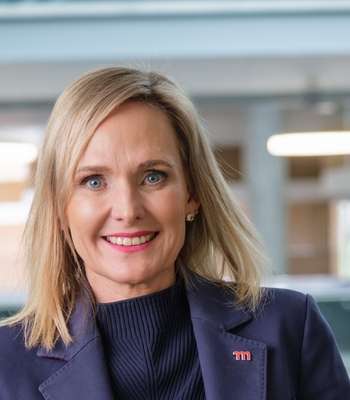
*Mickey Gambale, Executive Head: Investment Distribution and Market Strategy, Standard Bank IAM





 Insurance Biz proudly displays the "FAIR" stamp of the Press Council of South Africa, indicating our commitment to adhere to the Code of Ethics for Print and online media which prescribes that our reportage is truthful, accurate and fair. Should you wish to lodge a complaint about our news coverage, please lodge a complaint on the Press Council's website, www.presscouncil.org.za or email the complaint to enquiries@ombudsman.org.za. Contact the Press Council on 011 4843612.
Leave a Comment