

The hidden cost of always being the coping woman
Cape Town - There is a sentence many women have perfected. “I can manage. I will find a way. I always do.”
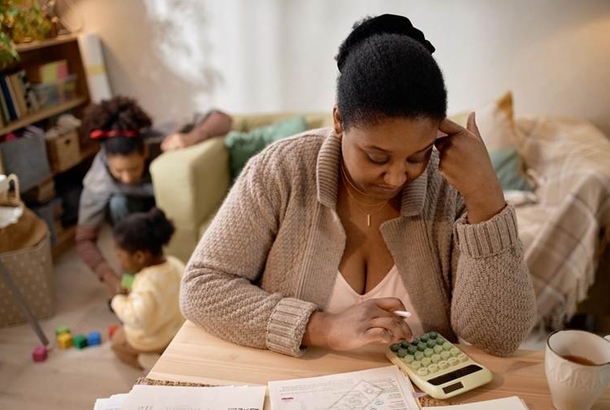
It is said when an unexpected bill arrives. When a relative needs help. When a child needs something that was not in the budget.
“But,” warns Lulama Mrara, Regional Manager at Old Mutual Personal Finance, “being able to cope is a strength. But constantly having to cope can come at a price.”
The woman who says this may be postponing her own needs, dipping into savings to solve someone else's crisis, delaying investments because there is always something more urgent, or telling herself she will focus on her future when things settle down.
The result can be the cumulative cost of always being the person who absorbs the pressure. It does not appear on a payslip or bank statement. Instead, it can show up in opportunities deferred, investments never started and the financial cushion that never quite gets built.
The latest Old Mutual Savings and Investment Monitor (OMSIM) suggests that many women are feeling that pressure acutely. Fifty-six percent of women worry about debt, compared with 46% of men, a 10-percentage point difference that points to a significant level of financial anxiety.
At the same time, women are actively finding ways to strengthen their income. The research found that 63% of women are poly-jobbers or have side hustles, compared with 56% of men.
“Women are not simply worrying about their financial circumstances. Many are actively trying to change them, taking on additional work, creating new income streams and finding ways to make the numbers add up,” Mrara says.
This is an important distinction. A side hustle, additional income or financial discipline is not the problem. These can be powerful tools for building greater financial resilience, provided they are part of a broader plan.
The question is not whether women should work harder. It is whether the additional effort is helping them move beyond simply getting through the month towards building something for the future.
The modern version of “I can manage” might be the woman working a full-time job while running an online business at night. It could be the professional taking on freelance work on weekends, or the woman supporting family members while creating another source of income.
She is coping. She is adapting. She is finding solutions.
But she can also use that resourcefulness to build.
“The ability to make a plan and keep going when circumstances change is an important strength, but it should not mean that women carry every financial burden alone,” says Mrara.
“Looking after your own financial wellbeing is not selfish. It is part of taking responsibility for your future and ensuring that you have the resources to deal with life's uncertainties”.
That means shifting the question from How do I manage this? to What do I want to build?
Additional income can help create an emergency fund, reduce expensive debt, increase retirement contributions, fund investments or create the financial independence to make choices based on opportunity rather than necessity.
Supporting family and building personal wealth do not have to be opposing priorities. The objective is to create enough financial resilience to do both without continually sacrificing one for the other.
Mrara says a useful question to ask is: If I had to stop coping tomorrow, would my financial life still hold together?
“If the answer is no, then it is a reason to start paying attention. Knowing where you stand is a good place to begin. What comes in each month? What goes out? How much is available in an emergency? What protection is in place if your income suddenly disappears? Are you building something for the years when you will no longer be earning a salary?”
These questions are not about restricting ambition or generosity. They are about giving hard work a destination.
A side hustle can generate additional income. Financial discipline can create surplus. Saving can provide a safety net. Investing can turn that surplus into longer-term wealth. The important step is connecting these actions to a bigger financial purpose.
The OMSIM findings therefore offer an opportunity to reframe the conversation. Women are already demonstrating initiative by finding new ways to earn and manage their finances. The next step is to ensure that this effort translates into greater security, independence and wealth over time.
This Women's Month, perhaps the conversation we need is not simply about encouraging women to be stronger. Many already are.
“It is about making sure that the strength, resourcefulness and determination women bring to their financial lives are working not only to help them cope today, but also to help them build the future they want,” Mrara says.






 Insurance Biz proudly displays the "FAIR" stamp of the Press Council of South Africa, indicating our commitment to adhere to the Code of Ethics for Print and online media which prescribes that our reportage is truthful, accurate and fair. Should you wish to lodge a complaint about our news coverage, please lodge a complaint on the Press Council's website, www.presscouncil.org.za or email the complaint to enquiries@ombudsman.org.za. Contact the Press Council on 011 4843612.
Leave a Comment