

The gap in your retirement plan: how to measure it, and where a retirement annuity fits
Most South Africans are on track to face a significant income shortfall in retirement, with research showing only 6% are on course for financial security. In this insightful piece, independent investment consultant Ziphozonke Mazibuko breaks down how readers can calculate their personal income replacement ratio, accurately spot their shortfall, and strategically leverage a Retirement Annuity (RA) to bridge the gap.
Covering key tax deductions (including the newly updated R430,000 cap), tax-free growth benefits, compound projections, and the practical impact of the two-pot retirement system, this article provides a clear, actionable roadmap to help your readers take control of their financial future.
The gap in your retirement plan: how to measure it, and where a retirement annuity fits.
Whether you're an employee or self-employed, a retirement annuity (RA) is accessible to you. This product gives you control over how you build an investment portfolio towards funding your retirement income. A well-funded retirement gives you financial freedom and security when you stop working for an income. Understanding your income replacement ratio is one of the most important steps in retirement planning, and one that is easy to overlook.
Saving for retirement means different things to different people. Some prefer accumulating physical income-generating assets such as rental property; others prefer investing in the markets. Both aim for the same thing: an income in retirement. Whichever route you take, a gap may open between the income you want and the income you actually get.
The income replacement ratio shows how much of your current income your retirement income is likely to replace. A common rule of thumb in the retirement industry is a replacement ratio of at least 75%, and some providers aim higher. Earn R60,000 a month and the target is R45,000 a month in retirement. Say your projection shows R32,000 a month, a replacement ratio of 53%. The R13,000 difference is your shortfall.
Knowing whether you have a shortfall is a first step. If you do, you can start contributing to a retirement annuity, if you do not have one already, or increase your contributions to close it. Old Mutual's 2025 research, based on actual member data from umbrella funds, found evidence for what it called National Treasury's "long-suffering statistic that only 6% of members are on track for a secure retirement".
Three common mistakes can undo an otherwise solid plan: cashing out your retirement savings when you change jobs, using two-pot withdrawals to cover short-term needs, and saving less than you should. In The Psychology of Money, Morgan Housel quotes a 1955 New York Times line: "everyone talks about retirement, but apparently very few do anything about it." It is never too late to start.
An RA has several tax incentives. You can deduct contributions of up to 27.5% of the greater of your remuneration or taxable income, subject to an annual cap of R430,000 (raised from R350,000 on 1 March 2026). That means you are taxed on a lower taxable income, and if you have already paid more than you now owe, SARS may owe you a refund. Contributions above the limit carry forward to future years of assessment.
Growth inside the fund is exempt from Capital Gains Tax (CGT), Dividends Tax and Income Tax on interest. RA benefits do not form part of your estate on death, generally bypassing estate duty and executor fees. The fund's trustees decide who receives the death benefits, taking your beneficiary nominations into account. Your funds are also generally protected from creditors. You stay in control: start or stop contributions when you choose, and retire any time from age 55.
Accessing your funds before retirement is limited, and withdrawals are taxed. The options are:
- Since 1 September 2024, one-third of new contributions go into a savings component. You can withdraw from it once a tax year, from R2,000, taxed at your marginal rate. The other two-thirds stay preserved until retirement.
- A total fund value below R15,000, once you have stopped contributing.
- Permanent disability that leaves you unable to carry on your occupation.
- Emigration, after three consecutive years as a non-resident for tax purposes.
The sooner you start, the more time your money has in the markets. Below is an illustration of R3,000 a month into an RA until age 55, when you can retire from the fund, and until 65, if you choose to keep investing. The example uses a growth rate of 10% a year after fees. That is an assumption, not a forecast. The figures are not adjusted for inflation.

Source: author's calculations.
Starting early and staying invested for longer improves your chances of closing the gap, thanks to compound growth over time. The R3,000 a month is R36,000 a year. On a R60,000 monthly income, that is well below the deduction limit of 27.5% of income. An entrepreneur with irregular income can pay in more in a strong year, and anything above the limit carries forward to later years.
A registered financial adviser who looks at your whole financial situation can help you do the projections, set your targets and work out the monthly amount that closes your gap. Plan for the future and act immediately.
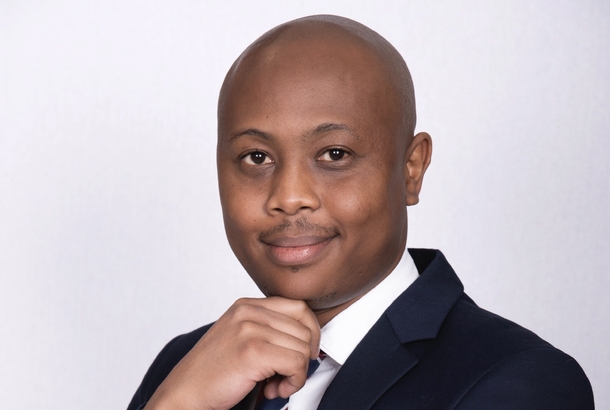
*Ziphozonke Mazibuko is an independent investment consultant based in Riyadh, with over 13 years' experience in South African asset management, fund distribution, and market development.







 Insurance Biz proudly displays the "FAIR" stamp of the Press Council of South Africa, indicating our commitment to adhere to the Code of Ethics for Print and online media which prescribes that our reportage is truthful, accurate and fair. Should you wish to lodge a complaint about our news coverage, please lodge a complaint on the Press Council's website, www.presscouncil.org.za or email the complaint to enquiries@ombudsman.org.za. Contact the Press Council on 011 4843612.
Leave a Comment