

Artificial intelligence is no longer a future consideration for the legal profession. It is fast becoming an everyday tool for lawyers, compliance officers and regulators, forcing organisations to decide not whether to adopt it but how to use it responsibly while remaining accountable for every decision it helps produce.
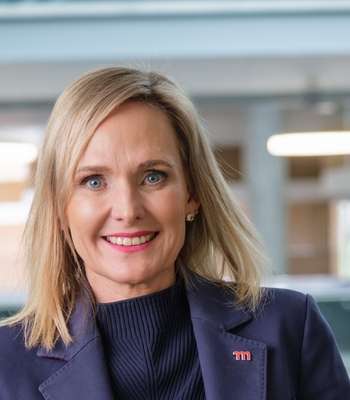
Werksmans Attorneys director and head of regulatory practice and service line leader for data privacy and cyber, Ahmore Burger-Smidt, spoke at the LexisNexis Protegé KYC launch in Johannesburg, where she said the profession should stop debating whether artificial intelligence would change legal practice and instead focus on ensuring lawyers remained in control of how it was adopted. "The question is no longer whether AI will transform. That's not the question. The question is how we, on each and every single occasion, can shape that transformation," she said.
Burger-Smidt said the global legal AI market was expected to be worth US$3.2 billion by 2027 as firms increasingly adopted the technology to draft regulatory submissions, analyse complex contractual clauses, compare legislation across jurisdictions and identify compliance gaps. She said AI had already changed how she prepared for legal work and recently used it to compare cyber security and data privacy legislation. "I evaluated certain aspects in 28 countries. In ten minutes, I had detailed tables on legislation. How beautiful is that from a legal perspective," she said.
Artificial intelligence is also changing how legal teams allocate their time. Burger-Smidt said AI could reduce document review times by between 70% and 80%, allowing lawyers and compliance professionals to spend less time processing information and more time applying legal judgement to complex matters. She said the technology was most effective in the hands of professionals who understood how to challenge its outputs instead of accepting every answer at face value. "AI will never replace me because I know what to ask of it. It's going to make us far more intelligent if we know what to ask and if we know what to do with that information," she said.
Speed and efficiency, however, would count for little without governance. Burger-Smidt warned that organisations adopting artificial intelligence also faced legal and regulatory risks stemming from opaque algorithms, biased training data, poor data governance and excessive reliance on automated decision making. She said businesses needed to understand exactly how their AI systems reached decisions because regulators and customers would increasingly expect explanations. "If you can't explain within your organisation what AI does, where does the data go, how long is it kept and how does it get destroyed, how can you actually rely on AI?" she questioned.
Burger-Smidt said organisations should establish AI governance now rather than wait for legislation to force change. South African businesses already operated within a regulatory environment shaped by the Protection of Personal Information Act, Financial Sector Conduct Authority requirements and the country's evolving approach to artificial intelligence. Responsible governance would therefore depend not only on technology but also on people who understood the legal and ethical guardrails surrounding its use. "The compliance officer of 2030 will not be defined by what they know. They will be defined by how effectively they leverage their ecosystems," she said.
The rapid adoption of artificial intelligence is also changing financial crime. Burger-Smidt said deepfake identity fraud, AI generated phishing campaigns and synthetic identities were making cyber crime more sophisticated and turning fraud prevention into what she described as "an arms race". The same technology was giving organisations new ways to identify behavioural patterns, detect suspicious activity and uncover fraud before significant losses occurred because AI systems could continually adapt and learn from new information.
Burger-Smidt noted organisations that built trust through transparency and accountability would be best positioned to benefit from artificial intelligence while managing its risks. "Risk is not a threat to be managed. It is actually a massive opportunity to seize, but you have to seize it responsibly," she said, adding that legal and compliance professionals had a responsibility to ensure innovation served both business efficiency and the public interest.









 Insurance Biz proudly displays the "FAIR" stamp of the Press Council of South Africa, indicating our commitment to adhere to the Code of Ethics for Print and online media which prescribes that our reportage is truthful, accurate and fair. Should you wish to lodge a complaint about our news coverage, please lodge a complaint on the Press Council's website, www.presscouncil.org.za or email the complaint to enquiries@ombudsman.org.za. Contact the Press Council on 011 4843612.
Leave a Comment