

Tau kaVodloza | KwaZulu-Natal and Gauteng province riots - taking stock
The riots that began on 9 July 2021 aimed at applying pressure on the government to release former president of South Africa, Mr Jacob Zuma from Escort Correctional Centre in KwaZulu Natal, unfortunately ended with billions of rands in damaged property and looted goods, about 300 people having lost their lives, and thousands whose livelihoods have been jeopardised. The series of seemingly calculated, and eruptive riots finally came to an end after 16 July 2021, following the deployment of more than 25 000 members of the South African National Defence Forces (SANDF) to assist the South African Police Service (SAPS) which, clearly, had been overwhelmed by the riots.
The riots, and their aftermath, have not only left insured big businesses and entrepreneurs battling to get back to business and recover lost resources and time, but also the uninsured entrepreneurs who have suffered financial ruin because of wanton looting. The trail and the scale of looting across KwaZulu-Natal and Gauteng was unprecedented, leaving several shopping centres and malls razed down or set ablaze, while goods in the occupant shops were looted. What happened in South Africa does not need a sharp analytical or robotic quantitative or qualitative tool to decipher. What happened is exactly what happens when the gross inequality that shapes a whole society boils over. This had been, for years, a glaring disaster waiting to happen. But politicians were forever wishing it away.
The second and third day saw several haulage and delivery vehicles along the national highways in the province stopped, looted, and incinerated. The wave of violent acts seemed to have overwhelmed the South African Police Services at the time in the province, calling for more officers to be drafted in from other provinces. By the third day, it was evident that the forces behind this wave were not relenting as it shifted to other parts of Gauteng province, including Soweto. Both insured and uninsured businesses falling victim to the violent riots and losing assets estimated to be in the north of R10bn. Political players, and the leadership in the current government seemed to have gone into a state of paralysis as the events quickly unfolded, unabated.
Most insured businesses pay a certain amount or percentage of their premiums to the South African Special Risks Insurance Association (Sasria), a non-life insurance company fully owned the state. Some companies pay these Sasria premiums through their general risk insurers, while some pay their premiums directly to Sasria. Individual insurance premiums also include a certain component of Sasria premiums which is generally passed on to it by various insurers monthly. Although this is a nominal figure which most people rarely bother to fully understand and appreciate, it always comes handy when a crisis of such a magnitude strike.
It is often in the event of a crisis of such magnitude that non-life insurers are appreciated by policyholders with a good standing, the regulators and government. Everyone looks towards the sector, even those who often label them “villains who always take and never give back” for the better part of the year. The importance of the sub-sector must never be downplayed. Thousands of entrepreneurs who possibly operated viable enterprises without insurance, and continually dismissed or postponed the idea of taking out insurance cover for their businesses now sit amid the rubble of their once lively and thriving businesses, with no hope of immediate revival. Their focus is now on what the government is punting as relief for the uninsured which may never come even closer to the value of the items lost. It will nonetheless be appreciated, under the circumstances, hopefully.
Indeed, this is a very sad situation, given that these entrepreneurs were also employers. The number of people who will be without jobs certainly increased in the month of July, adding to the millions of jobs already lost because of the Covid-19 pandemic. However, those entrepreneurs who had insurance policies and ensured that they are in good standing over the years will surely be reimbursed for the ascertained physical damages or losses to property as soon as loss adjusting firms are done with their assessments. For smaller companies it will take a few days or weeks, while some reports for bigger corporates might take months to years to finalise.
However, Mr Cedric Masondo, Sasria Managing Director and his team must be commended for their bravery, and for remaining resolute in steering their ship from treacherous waters to a relatively calm stretch. He has unwaveringly stood in the line of fire in the last three weeks, with the backing of his industry trade association the South African Insurance Association (SAIA) and members of the association. Even though he had to navigate through deep and extremely choppy waters - with other business spheres casting doubt over his organisations’ ability to settle the riot claims - he has remained calm, yet forthcoming with solutions. To quell any further doubts, the government also expressed its support and confidence in Sasria’s ability to settle claims, with President Cyril Ramaphosa publicly stating in his nation address that Sasria had the full backing of the government.
This was duly followed by action from the National Treasury a few days later, where Finance Minister, Tito Mboweni announced a provisional amount of R3.9bn which had been set aside for Sasria, and the uninsured. The minister further stated that this amount will be revised as more information emerges – a clear indication that whatever has happened - the government is prepared to go all out to ensure that the mess is cleaned up, as quickly and as quietly as possible. Government does have an intention to support the uninsured entrepreneurs too. However, the challenge will be the capability of the delivery vehicle. In his address, Mr Mboweni mentioned the Department of Trade and Industry and Competition (dtic), as well as the Department of Small Business Development (DSBD). The question is do these two departments have the capacity or they will piggyback on insurers to deliver an effective programme? This is clearly a minefield and navigating this space of the uninsureds will demand careful execution, which will include deciding on the criteria, documentation to be submitted, segmentation of these entrepreneurs, cleaning up of the data, fraud prevention and data verification.
It is pretty clear that behind the scenes, a series of well-synchronised discussions at government and regulator level, as well as through the industry association, SAIA to get all private sector players on the same page are continuing to take place. The decision by Sasria leadership to embrace all claims related to the riots steered it away from any possible or potential conflicts with its peers. The approach seems to have worked wonders so far, enabling the industry to work like a well-oiled machine, ensuring that all valid claims are expedited. On the other hand, the state-owned enterprise could have chosen to deal a tougher hand to its peers, who also happen to its agents, by seeking to delineate between what could be classified as pure and brazen criminality, and politically motivated riots. A fine line does exist. This would have meant that Sasria’s peers pays for criminally damaged property and looting, as it only settles politically motivated riots leading to property damage and looting. It would have boiled down to yet another long wait for policyholders, with a potential to soil the industry reputation further. However, the pragmatic approach by Sasria leadership, quickly taking charge and calming businesses, injected a lot of confidence and saved the day.
There is no doubt that SAIA members played their hand well in the election of Mr Masondo as SAIA Chair a few years back. His presence as Chair of the Board at the 58-member association, working side by side with Viviene Pearson has brought about significant synergies that continue to put the industry at an advantage. The industry put in a lot of effort in redeeming its image and reputation out of the Contingency Business Interruption (CBI) claims debacle - and cannot afford to have yet another wrangle - among themselves. This is an industry that rarely gets that pat on its back. However, the leadership we have seen from it during the last three weeks, led by Sasria, SAIA, the Ministry of Finance officials (National Treasury), FSCA and the Prudential Authority is commendable. We only hope that the execution of the processes within the framework and structure being laid by government works well, especially with the uninsureds, where although a will may exist, private sector participation will be limited.
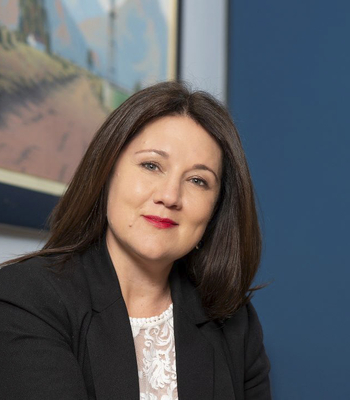
Tau kaVodloza is an experienced journalist and columnist who has written for various publications across the African continent. He offers Insurance Biz some thought-provoking insights from time to time. His new weekly column, Up-Side Down, is published exclusively on Insurance Biz.




 Insurance Biz proudly displays the "FAIR" stamp of the Press Council of South Africa, indicating our commitment to adhere to the Code of Ethics for Print and online media which prescribes that our reportage is truthful, accurate and fair. Should you wish to lodge a complaint about our news coverage, please lodge a complaint on the Press Council's website, www.presscouncil.org.za or email the complaint to enquiries@ombudsman.org.za. Contact the Press Council on 011 4843612.
Leave a Comment