
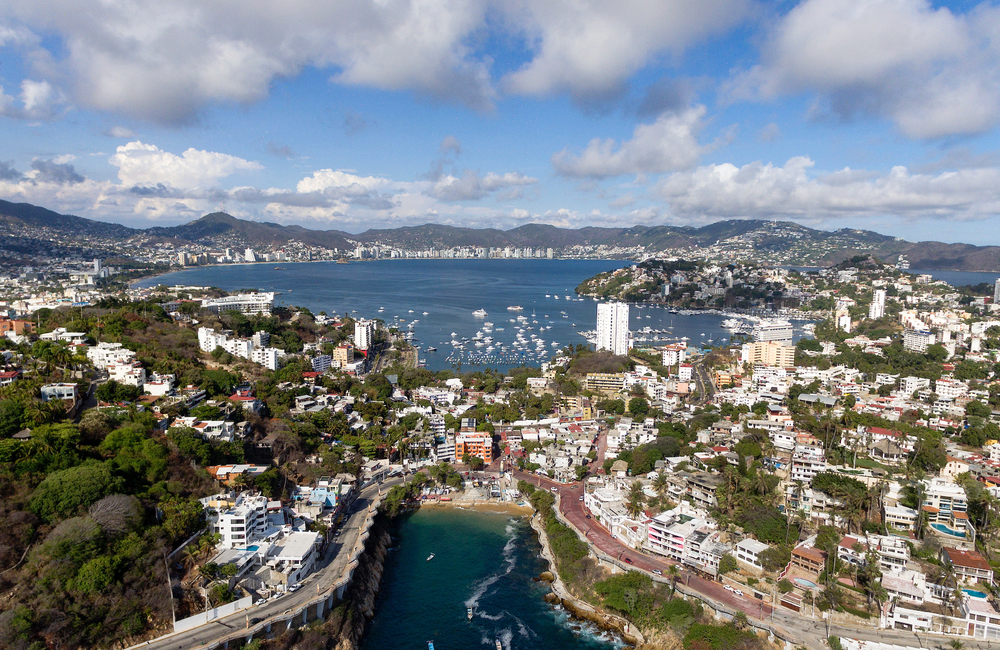
Resilient Coasts: HDI Risk Consulting analyses complex climate risks in Acapulco
Hannover - Weather events such as Hurricane Otis have made it clear that coastal areas require a new approach to risk management. HDI Risk Consulting (HRC), a wholly owned subsidiary of HDI Global, is therefore stepping up its analysis of physical climate risks at exposed locations worldwide. Using Acapulco Beach in Mexico as an example, the Corporate & Specialty insurer demonstrates how the combination of high-resolution data analytics and local expertise can help protect the tourism sector and critical infrastructure against the consequences of global warming and rising sea levels.
The expanded analytical focus of HDI Risk Consulting is a direct response to the rising complexity of damage scenarios in urban coastal areas. In locations where tourism, dense urban development and logistics converge along the waterfront, even minor shifts in environmental conditions can set-off a cascade of economic consequences.
"Through our initiative, we translate complex climate data into precise decision-making tools for on-site risk management," explains Lars Regner, Head of Resilience Services at HDI Risk Consulting. "Our aim at Acapulco is to ensure, through forward-looking resilience planning, that hotels, promenades and the local economy remain operational even under changing climate conditions. In doing so, we are securing the foundation for investments that must stand the test of time for decades to come."
Systemic Threat: Coastal Dynamics and Infrastructure Instability
Current studies of Acapulco Beach reveal an alarming trend: without the implementation of additional technical or nature-based protective measures, the coastline is shifting inland by approximately 1.20 metres each year. This continuous loss of land reduces the beach area essential for tourism and, at the same time, leads to the progressive degradation of natural buffer zones such as mangroves, dunes, and beach ridges. This massively increases vulnerability to storm surges, as the coast is less able to absorb wave energy. "Our analyses do not view physical climate risks in isolation, but as an interconnected system," explains Johanna Rohrer, Risk Analyst Natural Hazards at HDI Risk Consulting. "This highlights how coastal erosion and sea-level rise are gradually combining to create new infrastructural and economic risks."
Under a business-as-usual scenario, combined with a projected sea-level rise of 1.23 metres by the end of the century, there is a growing risk that coastal areas suitable for tourism will lose their functional viability. The impact on infrastructure is already evident: recurring scouring is endangering the foundations of hotels, roads and underground utility networks. The constant exposure to salt water is also accelerating corrosion and material fatigue across coastal structures. Particularly critical are the risks to supply systems, for example through salt water intrusion into groundwater or sewage overflows following heavy rainfall, both of which pose threats to public health.
Economic Causality: From Ecology to the Balance Sheet
The analysis by the HDI Risk Consulting team highlights how closely environmental change is intertwined with economic risk. "In Mexico, where many economic value chains are located directly along the coast, environmental changes have a direct impact on the financial stability of businesses. In Acapulco, we are seeing how coastal erosion, heat, and extreme weather are increasingly posing balance-sheet risks for both insurers and operators," explains Omar Mendoza, CEO of HDI Global Mexico. Coral reefs, which serve as natural breakwaters, are increasingly weakened by advancing ocean acidification and thermal stress. Their degradation deprives the coast of a critical protective barrier. At the same time, extreme heatwaves and tropical nights are taking a toll on the health of guests and staff. This directly undermines the location's attractiveness for tourism and its overall competitiveness. For hotel operators, this leads to rising operating costs for cooling and maintenance, alongside increasing investment uncertainty driven by potential insurance restrictions.
Constructive Strategies for Location Protection
To safeguard the long-term functionality and competitiveness of Acapulco Beach, HDI Risk Consulting has defined a comprehensive set of adaptation measures for proactive integration into operational practice:
- Coastal Protection and Land Reclamation: Protection and reforestation of mangrove stands to absorb wave energy, as well as targeted beach nourishment to restore the beach's natural protective function
- Resilient Infrastructure: Adaptation of building regulations through the use of saltwater-resistant materials, elevated foundations, and adherence to strategic minimum distances from the waterline
- Modernisation of Utilities: Expansion of the wastewater infrastructure to prevent contamination. Implementation of early-warning systems for storm surges and heatwaves
- Nature-Based Buffers: Promotion of calcareous organisms and seagrass beds as biological barriers, as well as active mosquito management to prevent infection risks following flooding
- Economic Security: Integration of climate risk data into long-term investment decisions to reduce capital costs and ensure the long-term insurability of projects
Using advanced analytical tools such as HDI ARGOS 4.0, HDI Risk Consulting enables its clients to better understand and actively manage physical climate risks. Protecting iconic destinations such as Acapulco is therefore not merely an environmental concern, but a critical prerequisite for the long-term economic sustainability of the global tourism industry.






 Insurance Biz proudly displays the "FAIR" stamp of the Press Council of South Africa, indicating our commitment to adhere to the Code of Ethics for Print and online media which prescribes that our reportage is truthful, accurate and fair. Should you wish to lodge a complaint about our news coverage, please lodge a complaint on the Press Council's website, www.presscouncil.org.za or email the complaint to enquiries@ombudsman.org.za. Contact the Press Council on 011 4843612.
Leave a Comment