
National disaster declaration a wake up call for SA's risk managers, says IRMSA
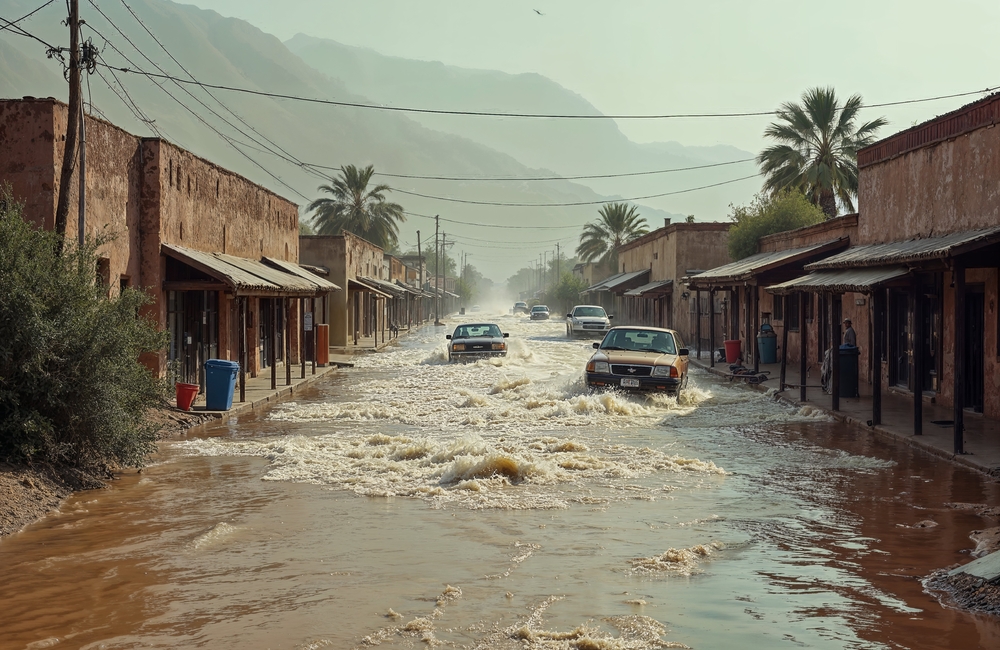
South Africa's latest national disaster declaration should be treated as a warning flare for every boardroom, municipality and public institution in the country: severe weather is no longer an occasional disruption. It is now a recurring operational, financial and social risk.
The classification of floods, thunderstorms, damaging winds and snowfall as a national disaster, following widespread disruption across several provinces, has again exposed the fragility of our infrastructure and the urgent need for better risk mitigation before the next crisis hits.
The Institute of Risk Management South Africa (IRMSA) says the declaration must not be seen only as a disaster-response mechanism. It should be seen as a national resilience test, and one that demands immediate action from risk managers, executives, municipalities and critical service providers.
IRMSA CEO Yvonne Mothibi says: "This is the moment where risk management has to move from the risk register to the real world. When communities are cut off, roads are closed, electricity and water systems fail, and emergency services are stretched, the question is not whether a disaster has been declared. The question is whether the country, its institutions and its businesses were ready for it."
The National Disaster Management Centre has classified the severe weather event as a national disaster after flooding, thunderstorms, damaging winds and snowfall affected large parts of the Western Cape, Eastern Cape, Northern Cape, North West, Free State and Mpumalanga since 4 May.
The classification allows for a more coordinated national response, with government structures intensifying disaster response, relief and recovery operations. But IRMSA says the deeper challenge is not only how the country responds after damage has occurred, but how it reduces vulnerability before the next shock.
According to reports, the Garden Route has been among the worst affected regions, with heavy rain and flooding disrupting towns and transport routes. Several communities have reportedly been cut off, roads have been closed, and parts of Nelson Mandela Bay have experienced unstable water and electricity services following infrastructure damage.
Mothibi says these events underline how quickly a weather shock can become a wider economic and governance risk: "A flood is not only a flood when it damages roads, interrupts electricity supply, affects water systems, keeps workers away from their jobs, delays deliveries, disrupts schools and places pressure on already stretched emergency services.
"That is why organisations need to understand risk as an interconnected system, not as a list of isolated events."
IRMSA says risk managers should now be leading urgent reviews of business continuity, infrastructure dependency, emergency response and recovery plans. These reviews should test practical questions: whether staff can operate remotely if routes are blocked, whether suppliers have alternative logistics plans, whether critical sites have backup power and water arrangements, and whether communication channels will still work during a severe disruption.
"Risk managers should be asking hard, practical questions," says Mothibi. "What happens if key staff cannot get to work? What happens if suppliers cannot move goods? What happens if a municipality cannot restore water or electricity quickly? What happens if digital systems are functioning, but the physical infrastructure around them has failed?"
She says it is no longer enough for organisations to say they have a crisis plan. Those plans must be tested, updated and understood by the people expected to implement them under pressure.
IRMSA says boards and executive committees should be asking for clear assurance on resilience, not generic reports. This includes updated risk registers, tested continuity plans, insurance reviews, emergency procurement procedures, employee safety protocols, data backup arrangements and clear decision-making authority during a crisis.
For municipalities and public entities, IRMSA says the focus should be on strengthening coordination between disaster management, engineering, finance, infrastructure, communications and community-facing teams. Recovery funding also requires proper assessments, verification, documentation and governance, making preparation essential even after a disaster has been declared.
"The lesson is that mitigation starts long before the storm arrives," says Mothibi. "It starts with maintenance, drainage, land-use planning, infrastructure investment, early-warning systems, credible data and clear accountability. If those foundations are weak, every disaster becomes more expensive, more disruptive and more harmful to vulnerable communities."
IRMSA says the latest classification should also be viewed in the context of South Africa's broader risk environment. The country has faced a series of recent national disaster classifications, covering severe weather, drought, disease and social harm. This points to a growing pattern of compound risk, where climate events, infrastructure weakness, public health pressures, crime, food security and social vulnerability interact.
"That pattern matters. South Africa is not dealing with neat, separate risks. We are dealing with cascading risks. One event can trigger consequences across transport, water, electricity, health, safety, business operations and public finances. Risk managers have a responsibility to help leaders see those connections before they become a crisis."
IRMSA says every organisation should use the latest disaster declaration as a trigger for a rapid resilience review. This should include identifying critical dependencies, updating escalation procedures, checking insurance and supplier exposure, reviewing staff safety plans and ensuring that leaders know exactly who is responsible for decisions during disruption.
"The country cannot prevent severe weather events, but we can reduce the damage. We can plan better, maintain better, communicate better and recover faster. That is the work of risk management, and it has never been more important," Mothibi concludes.





 Insurance Biz proudly displays the "FAIR" stamp of the Press Council of South Africa, indicating our commitment to adhere to the Code of Ethics for Print and online media which prescribes that our reportage is truthful, accurate and fair. Should you wish to lodge a complaint about our news coverage, please lodge a complaint on the Press Council's website, www.presscouncil.org.za or email the complaint to enquiries@ombudsman.org.za. Contact the Press Council on 011 4843612.
Leave a Comment