

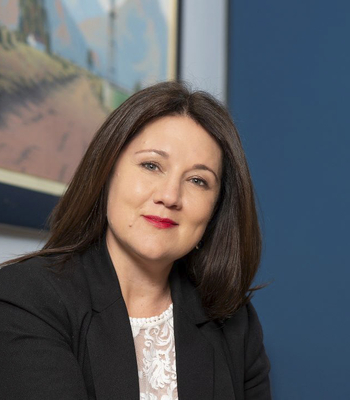
Linah Mabena | Reimagining the next evolution of insurance brokerage
The insurance industry is undergoing profound structural transformation. Climate volatility, economic pressure, digital acceleration, regulatory intensity and shifting customer expectations are reshaping both risk profiles and the operating models designed to manage them.
In this environment, brokerage can no longer be defined by product distribution alone. Its future lies in risk interpretation, strategic partnership and advisory excellence. The coming decade will not merely refine the broker’s role. It will fundamentally redefine it as brokerage transitions decisively from a product-led model to a risk-led model.
Changing Risk Patterns in a Complex World
Global risk dynamics are evolving rapidly. Climate change, cyber threats, pandemics and geopolitical instability are reshaping the risk landscape. Insurance needs are no longer static. Clients require adaptive, personalised, forward-looking cover supported by real-time risk monitoring.
Extreme weather events and climate volatility are altering underwriting assumptions globally and locally. Reporting by Moonstone Information Refinery, referencing global climate data, indicates that the economic costs linked to human-driven climate change have nearly tripled, rising from approximately $149bn between 2000 and 2004 to a projected $435bn between 2020 and 2024. Climate risk is no longer cyclical. It is structural.
South African households and businesses are already experiencing this reality through floods, fires, infrastructure strain and escalating rebuilding costs.
At the same time, cyber exposure is accelerating. The Everything Insure 2024–2034 Outlook projects that cyber insurance penetration among South African businesses will triple by 2030, reflecting heightened digital vulnerability and operational risk.
Risk is becoming more interconnected, more data-driven and more dynamic. The broker’s role in interpreting and structuring these evolving exposures has never been more critical.
Evolving Customer Behaviour and Digital Acceleration
Today’s customers are informed, digitally fluent and value-driven. They expect insurers to anticipate their needs, offer tailored solutions and provide proactive risk management rather than reactive claims handling.
Speed, transparency and simplicity are now baseline expectations. Clients demand frictionless omnichannel engagement, instant policy issuance and real-time servicing.
Technology is not merely enabling change. It is driving it. Artificial intelligence, IoT, blockchain and advanced analytics are reshaping underwriting, pricing and client engagement. Digital onboarding and automated claims processes are no longer differentiators. They are baseline requirements.
According to South African Insurance Future: Key Trends and Predictions 2024–2034, published by Everything Insure, more than 50 percent of insurance transactions in South Africa are projected to occur through digital channels by 2030. Digital engagement is not a distant future trend. It is an accelerating trajectory.
Yet digital growth has not diminished the need for advice.
Independent global research by UserTesting indicates that nearly nine out of ten consumers still prefer human advisers over fully automated options. Locally, the 2025 Santam Insurance Barometer reports that approximately 78 percent of businesses and more than half of personal lines clients continue to rely on brokers, with nearly nine in ten broker respondents identifying risk advice as central to their role.
Behind the scenes, transformation is measurable. The KPMG South African Insurance Industry Survey 2025 notes that AI-enabled transformation programmes have delivered 20 percent to 40 percent reductions in onboarding costs, alongside improved claims accuracy and faster liability assessments. Digital transformation is delivering tangible efficiency and customer experience gains.
Further, the Everything Insure outlook projects that by 2032, more than 75 percent of South African motor policies will incorporate telematics-based pricing. As underwriting becomes increasingly behaviour-driven, brokers will need to interpret granular data and help clients understand how behavioural indicators influence premium and cover.
Access to insurance has increased. Complexity has increased faster. As complexity rises, advice becomes more valuable.
What This Means for the Broker of the Future
Operational transformation as strategic advantage
Automation will increasingly handle administrative tasks such as onboarding, policy servicing and claims notifications. This shift allows brokers to focus on higher-value activities including judgement, empathy and strategic guidance. These remain areas where human expertise is irreplaceable.
Brokers as data interpreters
With telematics, IoT and behavioural underwriting becoming mainstream, brokers must translate complex datasets into actionable insights. Instead of merely placing policies, they will explain how driving habits, lifestyle indicators or digital exposures influence premiums and risk profiles.
Hybrid human-digital engagement
Clients expect digital efficiency alongside human reassurance. The broker of the future will blend mobile-first servicing with trusted advisory relationships. Efficiency and humanity will operate together as complementary strengths.
Risk partner, not policy seller
Brokers will evolve into continuous risk partners who proactively identify vulnerabilities and recommend mitigation strategies. Whether advising on cyber protection or highlighting risk behaviours that may affect premiums, this proactive approach strengthens resilience and deepens trust.
Competitive differentiation
Product access is increasingly democratised through digital platforms. Differentiation will lie in interpretation, contextualisation and human insight. The future broker is part analyst, part adviser and part advocate.
The Future Insurance Operating Model
Usage-based insurance, embedded insurance and personalised pricing are redefining value delivery. Clients increasingly expect integrated financial solutions rather than isolated products.
In this emerging model, brokers serve as strategic connectors who bridge insurers, clients and broader financial ecosystems. Technical knowledge remains foundational. However, technical knowledge alone will not differentiate.
The future of brokerage will be defined by the responsible interpretation of data, intelligent integration of technology and the delivery of advice that strengthens resilience in a complex world.
Insurance brokers of the future will be augmented professionals:
- Tech-enabled for efficiency
- Human-centred for trust
- Data-savvy for insight
- Proactive in risk management
The evolution of brokerage is not incremental. It is foundational. It is already underway.
*By Linah Mabena, Chief Executive, Standard Bank Insurance Brokers.









 Insurance Biz proudly displays the "FAIR" stamp of the Press Council of South Africa, indicating our commitment to adhere to the Code of Ethics for Print and online media which prescribes that our reportage is truthful, accurate and fair. Should you wish to lodge a complaint about our news coverage, please lodge a complaint on the Press Council's website, www.presscouncil.org.za or email the complaint to enquiries@ombudsman.org.za. Contact the Press Council on 011 4843612.
Leave a Comment