

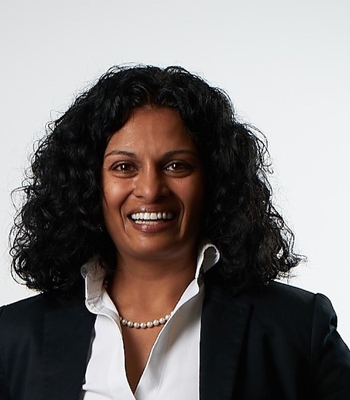
Karen Naidoo | Insurance growth is only as strong as the operation behind it
Businesses are under pressure to find new sources of growth while delivering more value to existing customers. For some, expanding financial services and offering insurance to an established customer base presents an attractive opportunity.
Cell-captive insurance enables a business to develop products tailored to its customers and commercial objectives. Through a ring-fenced arrangement within a licensed insurer, the business can share insurance risk and potential returns without establishing an insurer of its own. It gains access to specialist expertise and infrastructure while participating more directly in the value created by the proposition.
Yet entering insurance is not only a product, pricing, or distribution decision. It places the organisation’s brand behind a promise that will be tested when a customer experiences a loss.
The customer experiences one promise
An insurance proposition may involve the brand selling the product, a distribution partner, the business participating in the risk and returns, and the licensed insurer behind the policy. Each has a distinct role, but the customer experiences one combined promise.
When something goes wrong, customers are unlikely to separate those responsibilities. They remember the brand that offered the product and whether the promise was kept. Operational delivery is therefore a shared commercial and reputational responsibility. Delays, poor communication or inconsistent outcomes can undermine confidence in every organisation associated with the product.
Businesses should ask more than whether an insurance product can be launched. They should assess whether they and their insurance partner can deliver it consistently once customers begin buying, asking questions, and submitting claims.
Growth can expose operational weakness
Competition in non-life insurance is intense. Regulation is narrowing product differentiation, pricing can be matched, and digital platforms and broker consolidation have reduced some traditional distribution advantages. Speed to market remains valuable, but speed without operational readiness introduces risk.
As volumes increase, weaknesses that were manageable on a smaller scale become more visible. Unclear responsibilities cause delays, incomplete information moves between systems, and exceptions remain unresolved because decision-making authority is uncertain. Service quality can deteriorate as the operation struggles to keep pace with sales.
Sustainable growth is not simply the ability to acquire more customers. It is the ability to continue delivering fair, predictable outcomes as demand increases. Operational maturity helps stabilise growth, manage risk, and improve customer retention.
Claims reveal the strength of the proposition
Customer trust is built at the point of claim, when emotions are high and service delivery is most visible. Customers need to know what information is required, who is handling the claim, and when they can expect an outcome. In complex cases, clear and proactive communication gives customers confidence that the process is moving and that someone remains accountable.
Trust is shaped by more than the final decision. It reflects the accuracy, consistency, transparency, and communication demonstrated throughout the experience. The insurance promise may be made when the policy is sold, but the operation behind it determines whether that promise is fulfilled.
What operational readiness looks like
Operational excellence means executing insurance processes with discipline, accuracy, speed, and accountability. It translates strategy into consistent customer experiences and sustainable performance.
It begins with documented processes, effective controls, and clear ownership across every stage of the customer's claims journey. Standardisation creates clarity and accountability, while defined escalation routes allow professional judgement to be applied to complex risks and exceptions.
Effective execution also requires visibility. Operational data, performance information, and customer feedback should identify emerging issues and the causes of recurring delays, errors, and complaints. Regular reviews and clear measures help leaders maintain standards and guide continuous improvement.
Automation can reduce repetitive work and errors, allowing employees to focus on complex decisions and customer engagement. Technology strengthens a sound operating model, but it does not replace leadership, judgement, or accountability.
Choosing more than an insurance licence
For a business entering insurance, the choice of partner should not be based only on access to a licence or the ability to launch quickly. The right partner should understand the organisation’s risks, customers, and long-term ambitions.
Together, the parties should build a tailored solution supported by appropriate underwriting, actuarial analysis, governance, reporting, administration, investment, and reinsurance arrangements. This gives the business access to specialist capabilities while retaining an active role in managing risk and shaping the customer's proposition. Depending on the structure, it may also enable participation in underwriting performance.
These relationships work best as long-term partnerships rather than transactions. Both parties need visibility of performance and emerging risks, as well as open communication as customer expectations, regulation and market conditions change. Strong controls, clear processes and a culture of accountability build resilience without restricting innovation.
From cost center to strategic advantage
Operations should be viewed as a strategic differentiator, not only as a cost centre. Cost, speed, and productivity remain important, but they do not provide a complete view of operational performance. Leaders should also assess customer outcomes, predictability, resilience, service quality, and whether the operation supports retention while reducing recurring failures.
Operational excellence improves efficiency by reducing errors and rework. It also enables scalable growth by maintaining visibility, control, and service standards as the business expands.
Cell-captive insurance can help businesses manage risk more strategically, offer relevant products and participate more directly in insurance value. Realising that potential requires more than an innovative idea. It requires a trusted partner and an operation capable of supporting the proposition throughout its growth.
Before placing its brand behind an insurance product, a business should test the processes, responsibilities and capabilities behind the promise. Trust is not created by promise alone. It is earned through shared accountability and consistent execution.






 Insurance Biz proudly displays the "FAIR" stamp of the Press Council of South Africa, indicating our commitment to adhere to the Code of Ethics for Print and online media which prescribes that our reportage is truthful, accurate and fair. Should you wish to lodge a complaint about our news coverage, please lodge a complaint on the Press Council's website, www.presscouncil.org.za or email the complaint to enquiries@ombudsman.org.za. Contact the Press Council on 011 4843612.
Leave a Comment