

Every major fire raises the same question: Could more have been done to prevent it?
Johannesburg - The recent warehouse fire that destroyed a 2 000-square-metre industrial building in Johannesburg once again highlighted how quickly a single incident can bring business operations to a standstill, disrupt supply chains and place jobs at risk.
While investigators continue to determine the cause of the blaze, the incident serves as a timely reminder that effective risk management begins long before disaster strikes.
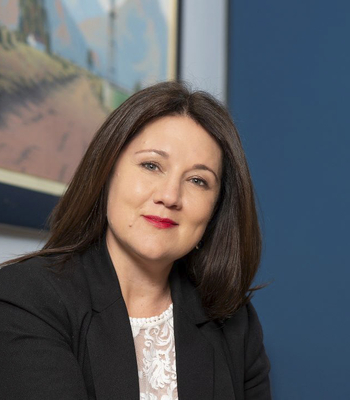
For Samantha Boyd, Chief Executive of Old Mutual Insure Specialty, these incidents reinforce an important reality, that insurance should not only provide financial protection after a loss but should also actively help businesses prevent losses from occurring in the first place.
“Every major commercial fire or catastrophic loss reminds us that the real question is not only how quickly a business can recover financially, but whether the risk could have been reduced or managed differently before the incident occurred,” says Boyd.
Premier Risk Solutions is a specialised division within Old Mutual Insure Specialty that provides tailor-made insurance and risk management solutions for businesses with high-value and complex risks. These include hospitals, manufacturing facilities, industrial plants, logistics centres, commercial buildings and specialist businesses that provide essential services to the South African economy.
Many of these businesses operate from ageing infrastructure, are situated in areas where municipal services are under pressure or rely on critical systems that cannot afford prolonged interruptions. In these environments, traditional insurance alone is not enough.
“Our responsibility extends far beyond underwriting risk. We work with our clients to understand their operations, identify vulnerabilities and implement practical interventions that reduce the likelihood and severity of losses. Every day that a hospital remains operational, a manufacturing plant continues production or a specialist repair facility keeps serving customers, all contribute to economic stability,” Boyd says.
One of the most critical aspects of this work is sophisticated risk modelling. Every property presents a unique risk profile, from the location, age and construction of a building to the availability of water supplies, fire protection infrastructure and emergency response capabilities.
“In some instances, one of the biggest challenges is not necessarily the building itself but the surrounding infrastructure,” explains Boyd.
“For example, if municipal water pressure is insufficient or firefighting resources are constrained, those realities significantly increase the potential impact of a fire. Understanding those risks allows us to develop practical mitigation strategies before an incident occurs”.
This proactive approach has enabed Old Mutual Insure Premier Risk Solutions to build collaborative partnerships with businesses and private service providers to strengthen risk management capabilities at all levels.
Where critical infrastructure gaps exist, the division works with stakeholders to explore practical solutions that improve emergency preparedness, including access to alternative water supplies and specialist firefighting resources where appropriate.
“No single organisation can solve these challenges on its own, and neither can government. Effective risk management requires collaboration between all the key stakeholders, including insurers, municipalities, private service providers as well as our clients. These partnerships are essential because they strengthen resilience before disaster strikes,” Boyd notes.
According to her, the sustainability of South Africa's commercial and industrial sectors depends on shifting the conversation from responding to losses to proactively preventing them from occurring.
“The businesses we insure are not simply buildings. They are employers, healthcare providers, manufacturers and service providers that keep communities functioning and economies growing. Every interruption has consequences that extend well beyond their balance sheets into the economy that we all depend on daily,” she adds.
Boyd notes further that proactive risk engineering has become one of the most valuable services insurers can offer large commercial clients.
“Our objective is simple: to help our clients continue operating safely and sustainably. When we proactively identify risks, recommend improvements and work with stakeholders to close infrastructure gaps, we are protecting far more than physical assets. We are helping businesses remain operational, protecting livelihoods and supporting economic resilience,” she explains.
As South Africa continues to face infrastructure challenges, climate-related risks and increasing pressure on critical services, businesses will need risk partners that bring technical expertise, practical solutions and collaborative thinking.
“Insurance should never be viewed only as a financial safety net. Its greatest value lies in helping businesses anticipate risk, strengthen resilience and minimise disruption long before a claim is ever submitted,” Boyd says.








 Insurance Biz proudly displays the "FAIR" stamp of the Press Council of South Africa, indicating our commitment to adhere to the Code of Ethics for Print and online media which prescribes that our reportage is truthful, accurate and fair. Should you wish to lodge a complaint about our news coverage, please lodge a complaint on the Press Council's website, www.presscouncil.org.za or email the complaint to enquiries@ombudsman.org.za. Contact the Press Council on 011 4843612.
Leave a Comment