

Coenraad de Bruin | Climate change is redrawing global trade and repricing risks
Climate change is no longer a distant environmental concern sitting in the background of global commerce. It is now actively reshaping the sea lanes that carry the majority of the world’s goods, altering who trades with whom, how long journeys take and what it costs to keep supply chains moving. Just as importantly, it is transforming how insurers, shipowners and cargo interests understand and price risk.
The foundation of this shift lies in the growing instability of the world’s maritime chokepoints. The Panama Canal, designed around a freshwater lock system, has become a vivid illustration of climate exposure. Prolonged droughts have repeatedly lowered water levels in Gatun and Alajuela Lakes, forcing canal authorities to impose draft restrictions and limit daily transits. At its most constrained, draft depths have fallen to around 44 feet and daily slots into the mid-20s. Ships unable to meet the requirements are rerouting around Cape Horn or the Cape of Good Hope, adding thousands of miles, more fuel burn and significant delays. Congestion has also pushed the canal into auction-style pricing for scarce transit slots, a reminder that climate stress quickly becomes economic stress.
The Suez Canal is less vulnerable to rainfall, but it inherits the pressure when Panama tightens. Flows diverted from the Pacific force congestion, longer wait times and greater operational strain in a region already coping with extreme heat. With both canals under growing constraints - one from hydrology, the other from overflow demand - the reliability of the world’s most valuable shortcuts can no longer be taken for granted.
Rising temperatures have also begun to open the Arctic, though its promise remains complicated. The Northern Sea Route, running along Russia’s Arctic coastline, can cut 10 to 15 days off the traditional Europe-East Asia voyage and, in theory, offers a route up to 40 percent shorter than the Suez passage. In practice, it remains a narrow, unpredictable window. Multi-year ice still drifts unpredictably, seasons are brief, and the region has sparse port and search-and-rescue coverage. Icebreaker escorts and strict regulatory oversight add further costs. The Arctic is opening - but not in a way that supports stable, global-scale container flows. Its current value is largely limited to destination cargoes such as LNG, where the economics align with seasonality.
Beyond the canals and the polar north, shipping is contending with increasingly volatile weather across the world’s oceans. Cyclones are growing more intense, storm tracks are shifting and changing wave patterns are forcing carriers to divert more often. Each diversion incurs more fuel use and delays. Meanwhile, ports face rising sea levels and storm surges that demand constant investment in higher wharves, flood defences and dredging. Those costs inevitably feed through into higher port dues and handling charges, adding another layer of inflation to global logistics.
Taken together, these changes are more than short-term disruptions; they are structural. The result is a world where the geography of trade is fluid. When Panama restricts traffic, southern African routes surge. When Arctic conditions briefly ease, northern corridors open to niche flows. Delivery times become harder to predict, and sourcing strategies must adapt. For many businesses, questions of route viability, seasonal windows and choke-point reliability are becoming as important as labour costs or tariff rules.
These changes matter profoundly to the insurance markets that underpin global shipping. Marine insurance was built on the assumption of relatively stable routes and predictable exposure patterns. As voyages lengthen and shift, so does the risk profile. A diversion around the Cape of Good Hope exposes a vessel to more heavy weather, greater machinery strain and deeper navigational complexity. Underwriters are responding with voyage-specific pricing, seasonal surcharges and higher deductibles tied to known storm periods.
Arctic voyages present an entirely different challenge. Insurers now expect vessels to carry appropriate ice-class notation, secure icebreaker escorts and comply with strict seasonal routing rules. Pollution risks in ice-bound waters are particularly concerning, as spill response and clean-up operations are exceptionally difficult. P&I Clubs are increasingly cautious, often requiring owners to retain more risk or accept sublimits for environmental liabilities.
Cargo insurance faces another emerging issue: the growing gap between physical damage and delay. Traditional cargo policies exclude pure delay losses, yet supply chains are being hit by non-damage disruptions - queues at canals, congestion at ports and weather-driven diversions. This has fuelled demand for new products such as parametric covers, which trigger payouts automatically when transit times exceed predetermined thresholds, and stock throughput programmes that provide continuity of cover across transit, warehousing and processing environments.
Insurers are also watching accumulation risk more closely. When vessels bunch up because of weather or chokepoint constraints, the value of goods concentrated at particular ports can climb sharply, creating large exposures to storm surge or flood events. Many insurers are tightening sublimits for high-risk ports and using geofencing rules to manage clustering.
Layered onto all of this is the global push toward decarbonisation. As the shipping industry experiments with new fuels such as LNG, methanol, ammonia and hydrogen, underwriters must assess unfamiliar machinery, new bunkering procedures, fuel-quality variability and the training needs of crews. These early-phase technologies carry both opportunities and risks: efficiency gains may reduce premiums, but mechanical teething problems and misfuelling events can increase them.
For cargo owners, the implications are far-reaching. Route choice increasingly determines sourcing decisions. If the Panama Canal faces seasonal constraints, flows from Asia to the US East Coast may shift to West Coast–rail combinations or return to Suez. Seasonal opportunities in the Arctic could benefit some northern European and East Asian ports, while southern routes gain prominence whenever canal disruptions intensify. In this environment, reliability can become as decisive as cost.
Risk is becoming a procurement variable in its own right. Buyers who once focused primarily on FOB or CIF prices must now evaluate the resilience of vendors’ logistics chains, the adaptability of their routing and the sophistication of their insurance programmes. The firms best positioned to succeed will be those that treat climate volatility not as an anomaly, but as a condition of the market.
In the end, climate change is quietly rewriting the geometry of global trade. Sea lanes are shifting, ports are hardening, insurance is adapting and supply chains are recalibrating. The oceans are becoming more dynamic and less predictable, and the cost of moving goods is increasingly tied to weather patterns, water levels and physical geography. For traders and insurers alike, the challenge is no longer to react to disruption - it is to build systems and strategies that assume it.
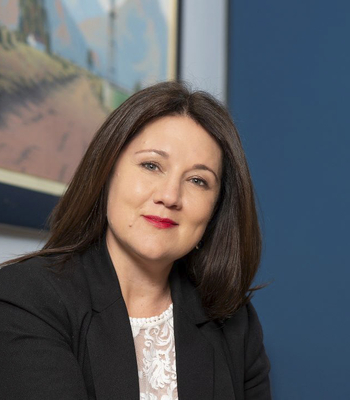
*Coenraad de Bruin is the Executive Head: Specialist Lines at Hollard Insure.





 Insurance Biz proudly displays the "FAIR" stamp of the Press Council of South Africa, indicating our commitment to adhere to the Code of Ethics for Print and online media which prescribes that our reportage is truthful, accurate and fair. Should you wish to lodge a complaint about our news coverage, please lodge a complaint on the Press Council's website, www.presscouncil.org.za or email the complaint to enquiries@ombudsman.org.za. Contact the Press Council on 011 4843612.
Leave a Comment