

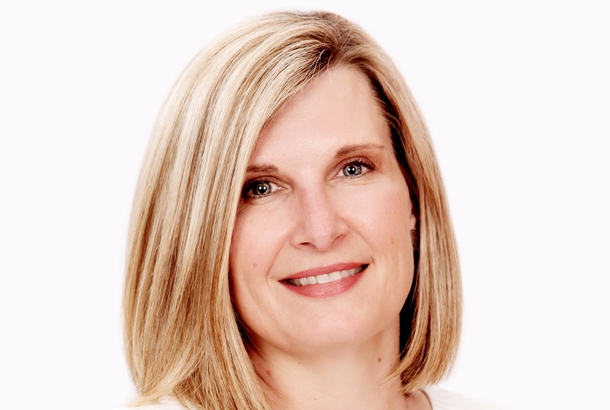
Sharon Hamman | Can we afford to rely on the state in old age?
For generations, retirement planning followed a relatively simple formula: saving enough money during your working years in an attempt to replace your monthly salary once you stop working. You saved for a fixed retirement age, purchased an annuity, and transitioned into retirement and a quieter lifestyle.
However, as demographic patterns shift, this traditional blueprint is no longer fit for purpose. People are living longer which means financial independence in old age is no longer just about replacing an income but about building long-term financial resilience to ensure the capital outlives the individual, and funding a growing array of healthcare and lifestyle needs.
With state resources already under increasing financial pressure, relying on public services as a backup plan may prove risky. As a result, retirement planning is not simply about replacing your salary. It is about preserving autonomy and choice, maintaining financial independence and reducing reliance on a system that may be under even greater strain when support is needed most.
SA’s demographic reality shift
Data from Statistics South Africa’s Marginalised Groups Series VIII – Healthy Ageing in South Africa shows a shift in the country’s demographic landscape. Driven by longer life expectancy, improved living conditions, and declining fertility rates, the number of South Africans aged 60 or older grew from 3.6 million (7.7% of the total population) in 2002 to 6.6 million (10.5%) in 2025.
While a longer lifespan is a triumph of modern healthcare and living standards, it has fundamentally changed the way people need to plan for retirement. Retiring at 60 or 65 no longer means funding for only 10 or 15 years of retirement. For many, retirement savings may need to last 20, 30 or even 40 years. In some cases, retirees can now expect to spend more years in retirement than they spent participating in the workforce, making long-term financial planning more important than ever.
Mounting pressure on public infrastructure
As South Africa’s older population grows, so does the demand for essential public services, most notably healthcare.
Stats SA data reveals that among older South Africans (aged 60+), reliance on public hospitals and clinics increased from 60.2% in 2002 to 68.5% in 2024. Yet, private healthcare coverage remains largely inaccessible to the broader public. In 2025, Stats SA’s General Household Survey revealed that only 15.5% of South Africans were members of a medical scheme, with significant regional disparities ranging from 25.9% in the Western Cape down to 8.2% in Limpopo.
While private medical cover remains out of reach for the majority, everyday healthcare needs do not disappear. As a result, many families are forced to pay out of pocket for basic medicines, specialist visits, and chronic care management.
The strain extends beyond clinics and hospital wards. An expanding older population inevitably increases demand for social grants, pensions, municipal services, and public infrastructure. Currently, over half of all South African households contain at least one social grant recipient. What is clear is that the state is operating with an overburdened resource pool supported by a constrained tax base.
Changing the retirement conversation
These realities mean we need to rethink what retirement planning really means. We need to shift the model from saving for a pension to funding lifelong financial independence.
When preparing for old age, we need to account for the very real probability of outliving our initial savings pool due to longer life expectancy. Medical expenses will continue to outpace general Consumer Price Index (CPI) inflation, absorbing a larger percentage of income as we age.
Relying on adult children or extended family for care and financial support places enormous strain on the next generation's ability to build their own financial stability. However, expecting public healthcare facilities and state pensions to provide an optimal standard of living in old age is increasingly unrealistic.
Financial independence as self-reliance
True financial independence is not about accumulating extraordinary wealth. Rather, it is about creating flexibility, resilience and choice. It means building sufficient assets, maintaining accessible emergency reserves, and putting appropriate risk protection in place to ensure you remain in control of your health, lifestyle and dignity, even when adverse life and health events occur.
The earlier the journey begins, the greater the opportunity to benefit from one of the most powerful tools in financial planning – time. Time allows compound growth to do the heavy lifting, providing you with the flexibility to adjust your plan as circumstances change and economic conditions evolve.
Navigating this journey to financial independence can feel intimidating. However, engaging proactively with a trusted financial adviser to receive professional financial advice can transform uncertainty into clear action. A well-structured financial plan helps individuals prepare for the realities of longer lifespans, rising healthcare costs, and the impact of inflation. More importantly, it provides the confidence that comes from knowing you are building a financial foundation designed not just to support retirement, but to sustain your independence, security, and quality of life throughout your golden years.
*Sharon Hamman is Senior Legal Adviser at Momentum.





 Insurance Biz proudly displays the "FAIR" stamp of the Press Council of South Africa, indicating our commitment to adhere to the Code of Ethics for Print and online media which prescribes that our reportage is truthful, accurate and fair. Should you wish to lodge a complaint about our news coverage, please lodge a complaint on the Press Council's website, www.presscouncil.org.za or email the complaint to enquiries@ombudsman.org.za. Contact the Press Council on 011 4843612.
Leave a Comment