

Severe illness and the hidden gap in Group Risk Cover
Johannesburg - In South Africa's workplace benefits environment, one persistent shortfall continues to undermine even the most basic financial planning efforts: the absence of severe illness cover. While life and disability insurance are commonly included in employer-sponsored group schemes, severe illness protection, particularly for high-incidence conditions like cancer, stroke and heart attack, is often omitted.
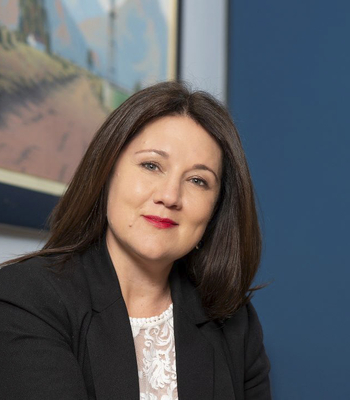
"Most employers don't cover severe illness under group schemes, and that's where financial advisers can step in," says Howard Freese, Certified Financial Planner® at Old Mutual Personal Finance. "Customers often believe that belonging to a medical aid and having disability cover is enough, while many young people assume their age and good health will shield them from serious illness. But when a major health crisis strikes, it's often those very individuals who face the harshest financial consequences."
Old Mutual's 2024/2025 claims data reinforces the severity of the risk, showing that 73% of severe illness claims came from just four conditions: cancer (68%), stroke (11%), heart attack (15%), and coronary artery bypass surgery (6%). Yet despite how common these illnesses are, many customers assume that medical aid, medical aid gap cover, or employer-sponsored group risk disability cover will provide the financial support they require during a serious health event.
Freese says that while many financial advisers believe cost is the primary barrier to uptake, the real obstacle is a misunderstanding of what severe illness protection actually provides. "What customers don't realise is that neither medical aid nor medical aid gap cover provides an upfront lump sum to help cover lost income, ongoing household expenses, or additional recovery costs," he says.
"And because they don't understand the differences between risk benefits such as disability and severe illness, they assume it's redundant and don't see the point of the extra spend."
Clarifying the Misconception
To help financial advisers explain this distinction more clearly, Freese offers a straightforward framework: two triggers, two outcomes.
"Disability cover responds to your ability to perform your occupational duties or daily tasks; therefore, it only pays out when you can't work anymore and where the illness or injury has affected your ability to perform those tasks," he explains. "Severe illness cover, on the other hand, is triggered the moment you're diagnosed with a listed condition - whether or not you're still able to do your job."
This framing gives advisers a practical tool for customer conversations. "Severe illness cover is not a duplication of disability cover - it's a response to the event, not the outcome," says Freese. "You can still be working and earning, but your finances may be under pressure because of medical shortfalls, treatment, or recovery time. That's where this benefit plays a critical role."
Reframing the Affordability Concern
While misunderstanding may be the most common barrier, cost remains a practical concern, especially for younger customers at the beginning of their careers. This is where financial advisers can shift the conversation from affordability to long-term structure.
Rather than positioning cover as a complete package that must be bought upfront, Freese suggests reframing it as a process of building a house: "You don't start with the roof; you start with the foundation." Financial advisers can use this simple analogy to help customers visualise severe illness cover as something that grows with them, not something they need to "afford all at once."
Freese suggests how to frame this with customers: "We don't need to address the entire severe illness shortfall today but rather implement an affordable level of cover that's reviewed annually to incrementally address the need over time," he says. "If we can simply start somewhere - get the basics covered and build on that over time - then we'll get our customers to where they need to be."
This approach empowers financial advisers to focus on what's practical right now. "We help customers understand the cover they ideally need," says Freese. "But from an affordability perspective, we ask: where can we start today? As life evolves, we can adapt and enhance their cover to meet changing needs."
Five Strategic Steps for Addressing the Severe Illness Gap
Review group cover with a new lens. Financial advisers should begin by carefully assessing what the customer's current employer-sponsored group risk cover includes. Many employees assume they are comprehensively covered, only to discover that severe illness protection is not part of their employer-provided benefits. Identifying this gap is often the most immediate and actionable step in the customer's risk plan.
Ground the conversation in lived reality. To make the risk tangible, financial advisers can shift the conversation from technical features to everyday impact. Asking questions such as, "If you were diagnosed with a serious illness tomorrow, how long could you continue to pay your bond or support your household?" helps customers appreciate the immediacy of the risk.
Use real data to highlight common risks. Bringing in credible claims data reinforces the relevance of the conversation. Financial advisers can point out that just four conditions - cancer, stroke, heart attack, and coronary artery bypass surgery - account for most severe illness claims. This turns the conversation from a hypothetical discussion into a likely scenario.
Position severe illness covers as lifestyle support. Rather than framing the benefit as a lump-sum payout, which can feel abstract, financial advisers can explain how the cover functions as a financial bridge during recovery. This includes covering treatment not funded by medical aid, replacing lost income, or funding rehabilitation. It's not about financial windfalls, but continuity and care during and after crisis.
Offer flexible solutions, not ultimatums. Affordability should never be a barrier to beginning the conversation. Financial advisers can offer scalable solutions that match the customer's current budget, with the option to increase cover as income and life circumstances evolve. Early engagement ensures better access, lower premiums, and more robust long-term protection.
While severe illness cover may be absent from many employer-sponsored group schemes, it need not remain absent from individuals' broader risk planning. "Financial advisers who can clearly explain the difference between severe illness and disability cover, correct the misconceptions, and help customers structure flexible and accessible solutions play a crucial role in protecting financial resilience," concludes Freese.





 Insurance Biz proudly displays the "FAIR" stamp of the Press Council of South Africa, indicating our commitment to adhere to the Code of Ethics for Print and online media which prescribes that our reportage is truthful, accurate and fair. Should you wish to lodge a complaint about our news coverage, please lodge a complaint on the Press Council's website, www.presscouncil.org.za or email the complaint to enquiries@ombudsman.org.za. Contact the Press Council on 011 4843612.
Leave a Comment