

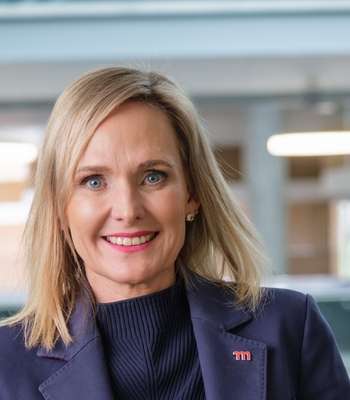
Matthew Green, Product Portfolio Manager at FNB Life Insurance.
Johannesburg - Education is one of the biggest investments that parents will make in their children's future. Yet new research from FNB shows that while 86% of parents are planning for education costs, only 49% have a clear, structured plan in place. What's more, 70% say, in hindsight, they would have done something differently, with many wishing they had started saving earlier or put more money aside.
These are among the findings from FNB's inaugural Education Insights Survey, which explores how South African families are preparing for their children's education and the challenges they face along the way.
For many parents, school fees are the starting point of the conversation. However, the reality is that the cost of education extends far beyond tuition. Uniforms, stationery, transport, technology, extra-mural activities, tutoring and school trips all add to the financial burden, often in ways that families do not fully anticipate when they begin planning.
The research highlights how these additional costs can chip away at parents' confidence over time. As children move through different stages of their education journey, new expenses emerge and financial pressures evolve, making long-term planning increasingly difficult.
Despite education being a priority for most families, planning often remains short-term. Nearly one in four parents are only planning one to three years ahead, while 58% have plans that extend to tertiary education and beyond. This means that a significant number of families are still not well prepared for the full cost of their children's educational journey.
The findings also reveal how heavily parents rely on their current income to fund education. Around 60% primarily use their monthly salaries to cover education-related costs, with savings and investment products often playing a secondary role.
Dedicated education savings or investment products are used by fewer than one in three parents, despite education being one of the largest financial commitments most families will make.
Matthew Green, Product Portfolio Manager at FNB Life Insurance, says the findings reveal a significant gap between intention and preparation when it comes to education planning.
"The survey shows that while 86% of parents are actively thinking about education costs, fewer than half have a clear strategy in place to fund those costs over the long term. Many parents recognise the importance of education, but planning often remains focused on immediate expenses rather than the full educational journey. Starting early, putting a structured plan in place and regularly reviewing that plan can help families better prepare for the rising cost of education and avoid financial pressure later on."
"Education is one of the most important investments parents can make in their children's futures. By taking a long-term view and incorporating savings, investment and protection solutions into their financial plans, families can build greater confidence in their ability to meet education costs and create opportunities for future generations."
Parents who have a structured plan in place tend to start earlier and think further ahead. They are more likely to use dedicated savings, investment or protection products and generally feel more confident about their ability to meet future education costs.
Confidence, however, tends to decrease as children progress through school. Many parents report concerns about the affordability of tertiary education, particularly as fees continue to rise and the cost-of-living places additional strain on household budgets.
Himal Parbhoo, CEO of FNB Insurance, says many parents' approach education planning as a series of annual expenses rather than a long-term financial commitment.
"Parents naturally want to give their children the best possible opportunities, but planning for education means thinking about the entire journey, not just school fees. Good financial planning should consider both the costs that emerge along the way and what happens when life does not go according to plan."
Parbhoo says the findings also highlight the importance of protecting education plans against life's unexpected events.
"Many parents believe they have contingency plans in place, but these are often broad financial safety nets rather than solutions designed specifically to protect a child's education. An unexpected life event can place a family's plans at risk and potentially disrupt a child's educational journey."
He says this is why FNB Life Insurance recently introduced the FNB Education Protector Plan, which allows parents to make provision for their children's education in the event of death, disability or critical illness. The solution is supported by an education cover calculator that helps parents estimate their future education funding needs.
"Ultimately, education planning is about more than paying for school. It's about protecting opportunities, supporting aspirations and giving children the best possible chance to achieve their potential, even when life takes an unexpected turn," concludes Parbhoo.
FNB plans to release the research annually, with the findings made available through an eBook aimed at helping South African families better understand and prepare for the full cost of education.





 Insurance Biz proudly displays the "FAIR" stamp of the Press Council of South Africa, indicating our commitment to adhere to the Code of Ethics for Print and online media which prescribes that our reportage is truthful, accurate and fair. Should you wish to lodge a complaint about our news coverage, please lodge a complaint on the Press Council's website, www.presscouncil.org.za or email the complaint to enquiries@ombudsman.org.za. Contact the Press Council on 011 4843612.
Leave a Comment